
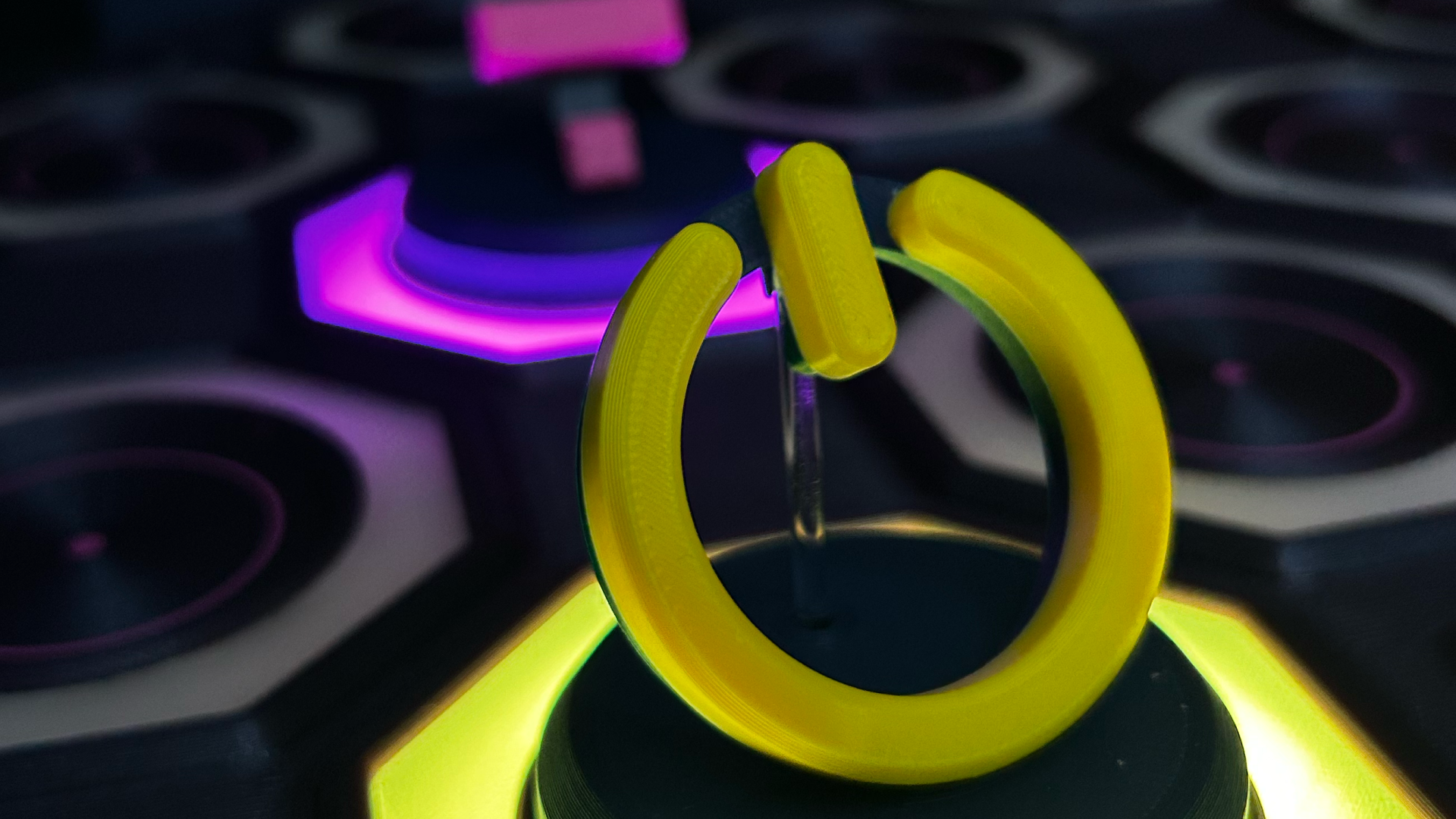
A hybrid demo is an interactive product demo that combines a physical model with a live digital view. But why does moving small objects around and watching what happens on a screen explain a complex solution faster than dozens of PowerPoint slides?
From watching to doing
A child learns by trying. Touch, move, build, see what happens. That doesn’t stop when we grow up.
Research shows that people learn and remember better when they get to do things themselves, and that hands-on action leaves a stronger memory trace than just listening or watching from the sidelines.
A hybrid demo builds on exactly this. The user doesn’t only hear how the solution works. They build it, test it and discover the connections themselves.
At a trade show, you may only have 30 seconds
At a trade show, nobody stops to listen to a long pitch. The main idea has to land within 30 seconds.
A hybrid demo makes a complex solution understandable at a glance. The physical model catches the eye, the user’s action sets something in motion, and the screen shows right away what happens inside.
A good demo works on many levels. Someone walking past gets the idea in half a minute, an interested customer digs into their own use case, and a specialist goes deep into the tech. The same demo catches attention and takes the customer all the way to a detailed sales discussion.
Hands make the abstract concrete
Many B2B solutions are hard to see. Networks, data flows, software and whole technical systems are often invisible and abstract. That’s why explaining complex B2B technology calls for something more tangible.
A physical model gives the thing a shape. The digital part shows what happens inside it. Add a new device, change the scenario or rebuild the network, and you see the result of your choice right away.
The brain links the physical action, the visible change and the new information together. A dry product list gradually turns into a real picture of how the solution works.
Interactivity puts the user in control
In a normal pitch, the seller decides the pace and the content. In a hybrid demo, the customer can explore exactly the case that matters to them.
Studies that compare interactive and one-way presentations show that letting people control the pace can make a complex topic easier to learn. The user can stop where it matters, try options and ask questions the moment their interest is sparked.
The salesperson doesn’t disappear. Instead of presenting, they guide the conversation. That’s what makes a hands-on product demo such a strong tool in B2B sales.
All publicity may be good publicity, but not all interactivity is
A good hybrid demo isn’t a tech showcase. If the interface is difficult, or the interaction has nothing to do with the content, it adds cognitive load instead of supporting understanding.
In the best hybrid demos:
- the physical action follows the logic of the solution
- every choice gives an immediate, clear result
- the main idea lands in the first few seconds
- the experience moves from a simple insight to deeper understanding
- the tech stays in the background and the solution stays in focus
Why hybrid demos work
A B2B decision isn’t made by a faceless company. It’s made by a person who first has to get interested, then understand, and finally justify the choice to everyone else.
PowerPoint can deliver information. A hybrid demo turns that information into action, results and a personal aha moment. That’s experiential B2B marketing at its best.
So the best hybrid demo does more than show a product. It catches attention in 30 seconds and lets people discover, with their own hands, why the solution matters.
Curious how a hybrid demo could make your solution easier to understand? Let’s talk.